

Entry
Phosphorus plays an extremely important role in the life of all living organisms, due to its role in numerous biochemical processes. Alongside the most important elements for plants—carbon, nitrogen, and potassium—phosphorus is one of the elements for which plants have particularly high nutritional requirements. Phosphorus performs important and irreplaceable functions in plant life processes such as respiration, photosynthesis, fat metabolism, nitrogen metabolism, and many others. However, from a biochemical perspective, phosphorus's most important role lies in its ability to form energy-rich bonds, resulting in compounds that serve as "energy stores.".
Phosphorus cycle in nature.
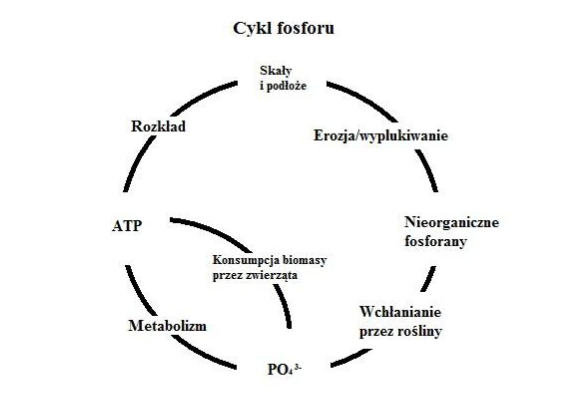
The constant exchange of minerals or elements between organisms and their environment is called the biogeochemical cycle. One of the most important is the elemental phosphorus cycle. The phosphorus cycle encompasses the movement of this element through living and non-living parts of the biosphere. Many chemical elements found on Earth are essential for processes and living organisms. Unlike oxygen and carbon, phosphorus follows complex pathways. It circulates in soil, rocks, water, and the Earth's atmosphere, as well as in the organisms inhabiting all these ecosystems.
Phosphorus and plants.
Phosphorus compounds are found primarily in rocks. Phosphorus does not pass through the atmosphere, but rocks containing phosphorus release phosphates (PO43-) into the ecosystem through weathering and erosion. For plants, phosphorus is an essential nutrient (second only to nitrogen). Plants absorb phosphates (H2PO4-, HPO42-) through root hairs, which are tiny projections on the root epidermis—the so-called rhizodermis. Plants can also take up phosphorus through leaves, with young tissues and leaves absorbing it most efficiently. Once inside the plant, it is converted into organic forms. Phosphorus is a component of sugar phosphates, nucleotides, nucleic acids, phospholipids, and coenzymes. Plants employ a variety of strategies to increase the availability and uptake of inorganic orthophosphates from the substrate. Phosphorus availability can be increased by the secretion of organic acids, particularly citric and formic acids, from the roots into the substrate and the conversion of iron, aluminum, and calcium phosphates into citrates, which are absorbed by plants. Reduced phosphorus availability also causes increased activity and secretion of extracellular phosphatases in roots, which hydrolyze organic phosphorus compounds. A decrease in phosphorus content in tissues increases phosphate ion uptake after plants are transferred to a complete medium. The increased capacity for PO43 - is explained by an increase in the number of P transporters in cell membranes and their affinity for phosphate ions. Phosphate transporters are known to exist in the membranes of chloroplasts and mitochondria.
Phosphorus deficiency and plant growth
The growth of plants deficient in this element is impaired. Unlike plants growing with deficient nitrogen levels, these plants are dark green. Phosphorus deficiency often results in excessive accumulation of anthocyanin pigments in plant tissues, which is the first symptom of phosphorus deficiency. In cases of severe phosphorus starvation, young leaves "draw" phosphate ions away from older leaves, causing them to die. A decrease in phosphorus content or its absence in the environment determines root morphology: root mass and length increase, while diameter decreases, more lateral roots develop, and they elongate. These changes increase the surface area for ion uptake. Ultrastructural studies of the cells in the root growth zone also revealed an increased number of vacuoles and the presence of secondary vacuoles in the cortex. Phosphorus levels in tissues significantly influence the course and intensity of photosynthesis by altering chlorophyll content and chloroplast structure, as well as influencing the reactions of the light and dark phases of photosynthesis, and the separation and metabolism of photosynthetic products. A slight deficiency of phosphorus in plant tissues causes an increase in chlorophyll content in the leaves.
The role of phosphorus in the storage and transfer of energy in plant tissues.
One of the properties of phosphorus is its ability to form energy-rich bonds, thanks to which the energy released during various processes can be temporarily stored and later used in processes that require energy input. Biological reactions can be divided into exoergic and endoergic. In the former type of reactions, a certain amount of energy is released, while in the latter type of reactions, energy is absorbed from the surroundings; in other words, these reactions must be supplied with energy. All major synthetic processes in the cell are endoergic. Synthetic reactions in biological systems are usually endoergic, therefore, for them to occur, they must be coupled to another reaction, namely one that can provide this energy. Phosphate bonds that provide significant amounts of energy are called high-energy.
author: Marcin Kołodziejczyk
-Iwona Ciereszko "Growth and metabolism of plants in conditions of phosphorus deficiency." Kosmos Volume 49 Number 1-2 2000.
-Gerhard Richter "Metabolic processes in plants" PWN 1975. Franck B. Salibury, Cleon Ross "Plant physiology" PWRiL 1975.
-Zurzycki J. Michniewicz M. "Plant physiology" PWRiL 1979.
-Otis F. Daniel G. Curtis Clark "Introduction to plant physiology" PWRiL 1958.
-Anna Nowotna-Mieczyńska "Physiology of mineral nutrition of plants. PWRiL 1965