
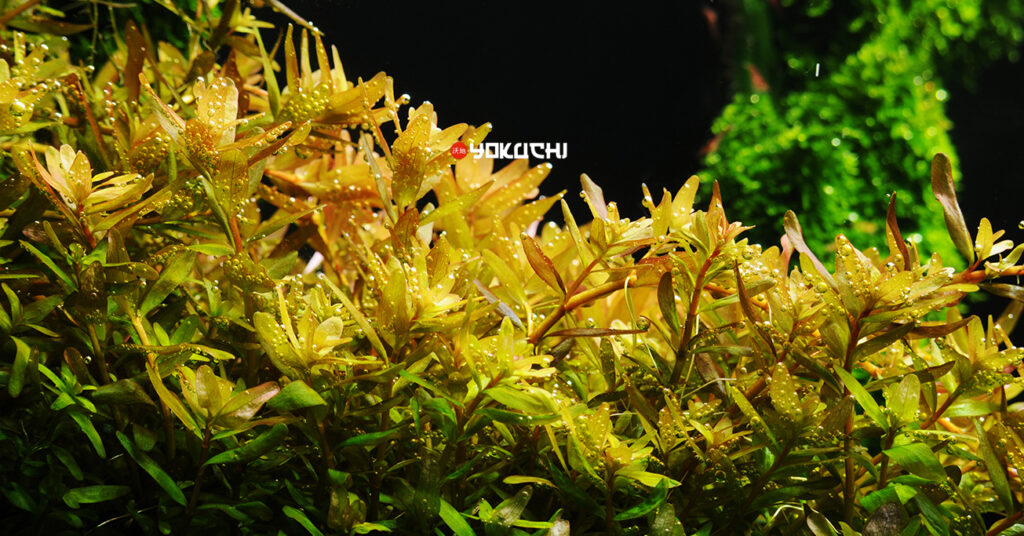
In our aquariums, we will strive to create a unique ecosystem encompassing all processes occurring within the tank. Creating complete symbiosis without intervention is virtually impossible. Therefore, we will strive to be as close to ideal as possible, replicating all natural phenomena in our underwater ecosystems. Perfectionism will ensure the best breeding results.
In our opinion, the most important processes are photosynthesis and the cycles of chemical decomposition, such as the nitrogen cycle. All individual processes are interconnected. In the following article, we will focus on understanding photosynthesis.
History
The English clergyman, philosopher, and chemist Joseph Priestley is considered a pioneer in the study of photosynthesis. At the turn of the 18th and 19th centuries, the scientific world was intrigued by the ability of plants to live and grow solely on air, water, simple trace elements, and light. In 1780, English chemist Joseph Priestley discovered that plants produce oxygen—a component he initially called simply "air." He discovered that the "air" he obtained caused candles to burn exceptionally brightly. He also experimented with mice and found that a mouse lived longer enclosed in the gas he created than in the same volume of ordinary air. Just a few years later, French chemist Antoine Lavoisier formulated the concept of oxidation, managing to do so before being beheaded during the French Revolution. The role of light in this process was determined by the Danish physicist Jan Ingenhousz, who continued his work, inspired by Priestley's experiments. The role of the other two components of photosynthesis—carbon dioxide and water—was discovered by two chemists living in Geneva, Jean Senebier and Theodor de Saussure. It was therefore established that:
6 CO2 + 6 H2O →C6H12O6 + 6 O2
Photosynthesis
"Nature has set itself the problem of how to catch rays of light reaching the earth in flight and bind them, accumulating the most elusive force of all. Plants absorb one form of energy – light – and produce another – chemical diversity." - Julius Mayer
Photosynthesis, scientifically described, is the synthesis of organic compounds (glucose) from simple inorganic compounds (mineral salts, water) in the presence of appropriate pigments and with the participation of light energy. This process produces compounds that are less oxidized, and therefore have a higher energy value. These compounds provide building blocks for autotrophs and food for heterotrophs. By fixing CO2 and releasing oxygen, photosynthesis also maintains the gaseous balance of the atmosphere. It is therefore a fundamental biological process that determines life on Earth.
Photosynthesis occurs in plants, bacteria, and protozoa and is located in specialized areas of the cell. In plants, these are chloroplasts, organelles concentrated in the parenchyma tissue of leaves.
Photosynthesis is a complex process that occurs in two phases.
Light phase (luminous)
This is a series of photochemical reactions—requiring light to proceed. It occurs in the granules where chlorophyll is stored. The primary function of this phase is to convert light energy into chemical bond energy, producing assimilative energy in the form of NADPH2 and ATP, with oxygen as a byproduct.
The transported electron gradually loses energy, which is partially dissolved as heat and partially stored as ATP. This process is called photosynthetic phosphorylation. Hydrogen cations combine with NADP to form NADPH2, which, together with ATP, provides the assimilation energy used in the dark phase. Electrons from the water molecule migrate to the chlorophyll, filling the gaps. Oxygen, meanwhile, escapes into the atmosphere through the stomata.
Dark phase (Calvin cycle)
This is the CO2 reduction cycle. It consists of a series of biochemical reactions using energy produced by light. It occurs in the chloroplast stroma, where all the enzymes necessary for this process are stored.
There are three main stages of the dark phase:
• carboxylation: CO2 taken from the atmosphere is attached to an activated five-carbon sugar – ribulose diphosphate (RuDP) or ribulose (RDP). After attachment, this six-carbon compound breaks down into two three-carbon molecules – phosphoglyceric acids (PGA);
• reduction: PGA is reduced to six molecules of glyceraldehyde-3-phosphate (GAP). The reaction involves the assimilation force of NADPH2 and ATP;
• regeneration: during which five GAP molecules are used to rebuild (regenerate) the CO2 acceptor – RuDP (3 CO2 molecules are attached simultaneously). The remaining one molecule is the net product of photosynthesis and serves as a substrate for the production of more complex organic compounds.
Most plants assimilate CO2 from the atmosphere directly by incorporating it into the reductive Calvin cycle.
The intensity of photosynthesis depends on many factors.
External factors:
• Light – limits the light phase of photosynthesis. It is also the main factor influencing the development of leaf parenchyma, chlorophyll synthesis, and chloroplast formation. Photosynthesis occurs under both natural and electric lighting. However, only a portion of the energy incident on the leaf is converted into chemical energy of assimilates. The rate of this process depends on both the color and intensity of light, as well as the plant type. Shade-loving plants achieve their highest efficiency at just 1/10 the intensity of full sunlight. Photophilous plants grow best under intense lighting. Excessive light inhibits photosynthesis, causing oxidation and inactivation of chlorophyll molecules. Transpiration also increases excessively, cells lose turgor, causing stomata to close, inhibiting the inflow of CO2.
• Carbon dioxide (CO2) – the concentration present is not optimal for plants. An increase of approximately 0.12% triples the intensity of photosynthesis. This is why CO2 is used. Gaseous CO2 passes through the stomata into the intercellular spaces, from where it diffuses into the green parenchyma cells. Aquatic plants absorb it in the form of HCO3- ions.
• mineral salts – a source of substances for synthesis, activators of many transformations. A deficiency of just one nutrient, even with a sufficient supply of others, limits photosynthesis (law of minimum). For example, in the case of nitrogen salt deficiency, chlorophyll synthesis is inhibited, and leaf chlorosis occurs.
• temperature – photosynthesis is an enzymatic process whose thermal optimum is 20-30ºC. Above this temperature, a rapid decline in the intensity of the reactions is observed. The tolerance range of plants varies widely and depends on their species and location. In most cases, photosynthesis ceases at a temperature of 40ºC.
Internal factors:
• structure of organs and tissues involved in photosynthesis: leaves, chlorenchyma system, stomata (number and arrangement), water-storing tissue, pigments;
• physiological properties of the plant:
– the ability to manipulate the arrangement of leaves and chloroplasts;
– the efficiency of the system supplying water and mineral salts;
– mechanisms protecting against overheating and excessive transpiration.
Photoautotrophs utilize solar radiation energy with wavelengths of approximately 400-700 nm, absorbing primarily blue and red wavelengths. Colored chemical compounds called photosynthetic (assimilative) pigments play a key role in this process. They are found in greater quantities in shade-loving plants than in photophilous plants.
There are three main groups of pigments:
Chlorophylls – they absorb blue and red wavelengths. Green pigments dissolve in organic solvents and fats, but are insoluble in water.
Each chlorophyll molecule is composed of pheoporophyrin, a porphyrin derivative. A central position is occupied by a magnesium atom, which bonds with the nitrogen atoms of each ring. Green dyes absorb visible light in the 370-760 nm range, each of them having its own characteristic absorption spectrum with two peaks - one in the red range, the other in the blue-violet part.
Carotenoids (e.g., β-carotene) are yellow or orange accessory pigments found in all photoautotrophs. They absorb light from the blue-violet part of the spectrum and then transfer it to the chlorophyll molecule. Furthermore, they protect photosystems from excess incoming light energy, which they absorb or redirect to other physiological processes. They also protect the cell from reactive oxygen species (antioxidant activity). Carotenoids are tetraterpenes (40-carbon terpenoids). They are photolability, meaning they undergo changes in the presence of light. They occur at lower concentrations than chlorophyll.
Phycobilins (e.g., phycocyanin, phycoerythrin) are accessory pigments found in red algae and cyanobacteria. They are the only photosynthetic pigments associated with water-soluble proteins. They capture light energy in the 450-600 nm range and then transfer it to chlorophyll. This is an adaptation to life at great depths.
SOURCES:
- Claudia Girnth-Diamba and Bjørn Fahnøe; Observation of photosynthesis in aquatic plants
- Lubert Stryer "Biochemia", collective translation edited by Jacek Augustyniak and Jan Michejda from the fourth American edition;
- Ewa Pyłka-Gutowska "Biology. Vademecum for High School Graduates"; "Oświata" Publishing House;
- Henryk Wiśniewski "Biology for the third grade of general secondary school with a basic and biological-chemical profile",
- Photosynthesis Adam Kuzdraliński